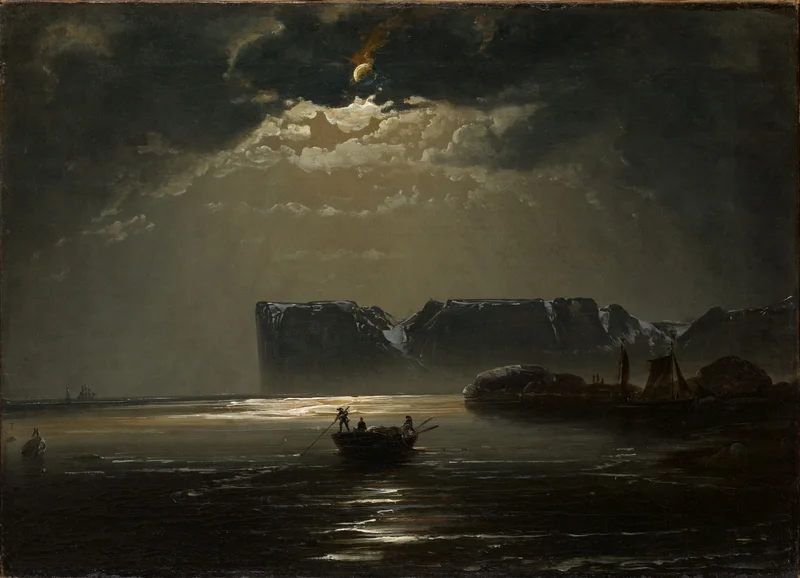
Norway’s massive North Cape (Nordkapp), at the northernmost reaches of Europe, looms over the horizon in this dramatic coastal seascape. A brilliant moon high above, at the apex of a theatrical archway of dark, light-fringed clouds, bathes the scene in a cold lunar glow. Present in the foreground as witnesses to this sublime, awe-inspiring scene are some figures in a rowboat and in two humble sailing craft nestled in a nearby rocky cove.
The North Cape, which Balke visited once on an arduous trip in 1832, became a signature leitmotif in his painting, conjured time and again through the filter of memory and imagination. The present composition, known in numerous variants, is one of his most iconic. With a limited palette of steely blue, white, and dark brown, Balke painted the picture with remarkable, wet-in-wet fluidity and technical bravura. He scraped down the paint in the sky to create the effect of lunar rays, and he made liberal use of impasto for his white highlights—at the edges of the clouds near the top and in the reflected moonlight on the water below.